
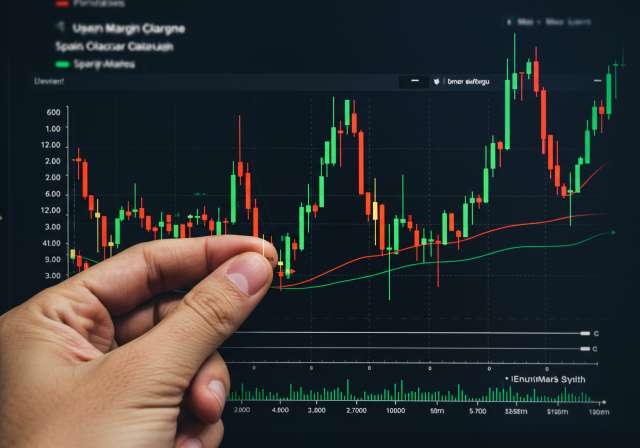
Unlock stock market potential! Learn how a demat account with free trading account simplifies investing on NSE/BSE. Discover benefits, choosing a broker, and…
India’s financial landscape is experiencing an unprecedented revolution. With increasing financial literacy, easier access to digital platforms, and a burgeoning middle class looking for avenues to grow their wealth, the Indian equity markets have become a focal point for many aspiring investors. Gone are the days when stock market investing was perceived as a complex, elite activity. Today, with the right tools and understanding, anyone can participate in India’s growth story. And at the heart of this accessibility lies the indispensable duo: the demat account and the trading account. Even more appealing for new entrants is the option of a demat account with free trading account – a proposition that has democratized market access like never before.
For decades, physical share certificates were the norm, prone to issues like theft, damage, and cumbersome transfer processes. The advent of dematerialization, regulated by SEBI, fundamentally transformed this. Today, whether you aim to invest in stocks listed on the NSE or BSE, buy units of Exchange Traded Funds (ETFs), or participate in initial public offerings (IPOs), a demat account is your digital locker. Coupled with a trading account, which acts as your gateway to execute trades, you have a complete ecosystem for market participation. In this comprehensive guide, we will delve deep into what these accounts entail, why the “free” aspect is so attractive, how to choose the right one, and everything else you need to know to kickstart your investment journey.
What Exactly is a Demat Account?
Imagine a digital vault where all your financial securities are stored safely and electronically. That, in essence, is a demat account. The term “demat” is short for “dematerialized,” meaning your physical share certificates are converted into an electronic format. In India, demat accounts are maintained by Depository Participants (DPs), who are agents of either the National Securities Depository Limited (NSDL) or the Central Depository Services (India) Limited (CDSL). These two depositories are the backbone of India’s electronic securities system.
A demat account serves as a repository for a wide range of securities, not just equity shares. This includes:
- Equity Shares (Stocks)
- Mutual Funds (especially those bought in direct mode or ETFs)
- Bonds and Debentures
- Government Securities (G-Secs)
- Exchange Traded Funds (ETFs)
- Sovereign Gold Bonds (SGBs)
- Rights issues, bonus shares, and other corporate actions
Opening a demat account is mandatory if you wish to trade in the Indian stock market. It eliminates the risks associated with physical certificates, such as loss, damage, forgery, and the lengthy process of transfer. With a demat account, your holdings are secure, easily transferable, and accessible digitally, providing unparalleled convenience and safety.
Understanding the Trading Account
While a demat account holds your securities, a trading account is the actual interface that allows you to buy and sell them on the stock exchanges (NSE and BSE). Think of it as your active transaction window. When you decide to purchase shares, you place an order through your trading account. If the order executes, the funds are debited from your linked bank account, and the shares are then credited to your demat account. Conversely, when you sell shares, they are debited from your demat account, and the proceeds are credited to your bank account via your trading account.
Key functionalities of a trading account include:
- Placing buy and sell orders for various securities.
- Accessing real-time market data, charts, and analysis tools.
- Monitoring your order book and trade book.
- Managing your portfolio (though the actual holdings reside in your demat account).
- Initiating fund transfers to and from your bank account.
A trading account acts as the intermediary between your bank account, your demat account, and the stock exchange. It is the tool that facilitates the dynamic process of buying and selling in the market.
The Power Couple: Demat Account with Free Trading Account
It’s rare to find a demat account offered in isolation. In India, stockbrokers (who also act as Depository Participants) almost invariably offer a combined 3-in-1 account, which integrates your Demat account, Trading account, and a linked Bank account (often facilitated through a payment gateway or direct bank linkage). The term “demat account with free trading account” specifically refers to brokers waiving off the account opening charges for both the demat and trading components.
The synergy between these two accounts is crucial:
- Seamless Transactions: Your trading account communicates with the exchange to execute buy/sell orders. Once a trade is settled, your demat account is updated to reflect the new holdings.
- Integrated View: Most brokerage platforms provide a consolidated view of your portfolio, showing both the cash balance in your trading account and the securities held in your demat account.
- Single KYC: When you open a demat and trading account simultaneously, you typically undergo a single Know Your Customer (KYC) process, saving you time and effort.
The “free” aspect is particularly attractive for new investors. Many discount brokers in India now offer zero account opening charges for both the demat and trading accounts. This lowers the barrier to entry significantly, allowing more individuals to explore market investing without an initial upfront cost for setting up the necessary infrastructure.
Why is “Free” So Appealing? Understanding Brokerage Models
When a broker offers a “demat account with free trading account,” it primarily means they are not charging you an initial fee to open these accounts. This is a common strategy by brokers, especially discount brokers, to attract new clients. But how do they make money then?
Brokers typically generate revenue through a combination of:
- Brokerage Charges: This is the fee charged for executing trades (buying or selling). While some brokers offer zero brokerage for equity delivery trades, most charge a flat fee (e.g., ₹20 per trade) or a small percentage for intraday, F&O, and other segments.
- Annual Maintenance Charges (AMC): While the trading account might be free to open and sometimes even free from AMC, demat accounts usually carry an AMC. This can range from ₹300-₹800 per year, though some brokers offer lifetime free AMC or waive it for the first year.
- Transaction Charges: Small fees levied by exchanges (NSE/BSE), SEBI, stamp duty, and Goods and Services Tax (GST) on brokerage.
- Other Services: Charges for research reports, advisory services, call & trade facility, margin funding, etc.
So, while the account opening might be free, it’s essential to understand the ongoing charges. The “free” aspect is a powerful marketing tool that effectively removes the initial financial hurdle, encouraging more people to take the first step towards investing in the Indian stock market.
Compelling Benefits of Opening a Demat Account with Free Trading Account
Opting for a demat account with free trading account offers a plethora of advantages for investors in India:
- Unrestricted Market Access: It provides you with the gateway to invest in thousands of companies listed on the NSE and BSE, participate in IPOs, and diversify your portfolio across various sectors and market capitalizations.
- Cost-Effective Entry: With zero account opening charges, new investors can enter the market without an initial financial burden, making equity investing more accessible.
- Digital Convenience: Manage your investments from anywhere, anytime, using a computer or mobile app. Place orders, monitor your portfolio, and track market movements with just a few clicks.
- Enhanced Security: Electronic holding of securities eliminates the risks of theft, loss, or damage associated with physical certificates. SEBI regulations ensure a secure and transparent trading environment.
- Faster Settlement: The demat system ensures quick and efficient settlement of trades. When you sell, funds are credited faster (T+1 day settlement cycle now common for equities on NSE/BSE), and when you buy, shares are credited promptly.
- Easy Corporate Actions Management: Benefits like bonus issues, stock splits, and dividends are automatically reflected in your demat account, simplifying management.
- Diversification Potential: Beyond stocks, you can invest in ETFs, G-Secs, SGBs, and even direct mutual funds through your demat account, allowing for a well-rounded portfolio.
- Transparency and Record-Keeping: All your transactions and holdings are recorded electronically, providing a clear audit trail and easy access to historical data for tax purposes or portfolio analysis.
- Wealth Creation Opportunity: Investing in equities, especially for the long term through disciplined approaches like SIPs in stocks or ETFs, offers the potential for significant wealth creation, harnessing the power of compounding and India’s economic growth story.
Who Should Consider a demat account with free trading account?
This offering is ideal for a wide range of individuals:
- First-Time Investors: If you’re new to the stock market and hesitant about initial costs, a free demat and trading account offers a low-risk entry point.
- Young Professionals: Looking to start early on your wealth creation journey? This is your stepping stone to direct equity investments.
- Existing Investors: If your current broker has high AMCs or trading charges, or an outdated platform, switching to a broker offering a free account could save you money and improve your trading experience.
- SIP Enthusiasts: While many invest in mutual funds via SIPs, you can also do SIPs in specific stocks or ETFs through your trading account, benefiting from rupee cost averaging.
- Long-Term Savers: If you’re thinking beyond traditional instruments like PPF and NPS and want to allocate a portion of your savings to market-linked products for potentially higher returns, this is essential.
- Anyone Seeking Financial Independence: Understanding and participating in the equity markets is a crucial step towards taking control of your financial future.
Choosing the Right Broker for Your Demat Account with Free Trading Account
While the “free” aspect of account opening is appealing, it’s crucial to look beyond just this one factor. Choosing the right Depository Participant (DP) or stockbroker is a pivotal decision that impacts your entire investment journey. Here are key considerations:
- Brokerage Structure:
- Delivery Trades: Many discount brokers offer zero brokerage for equity delivery trades. This is a significant saving for long-term investors.
- Intraday & F&O: For intraday trading, Futures & Options (F&O), commodities, and currency, check the flat fee per trade (e.g., ₹20) or percentage-based charges. Compare these closely as they can add up.
- Account Opening Fees & AMC:
- Confirm that both demat and trading accounts are indeed free to open.
- Inquire about the Demat Account Annual Maintenance Charges (AMC). Some brokers offer lifetime free AMC, while others charge an annual fee.
- Trading Platform & Technology:
- User Interface (UI): Is it intuitive, easy to navigate, and visually appealing?
- Mobile App: A robust and feature-rich mobile app is essential for on-the-go trading.
- Charting Tools: Advanced charting, technical indicators, and drawing tools are crucial for analysis.
- Speed & Reliability: The platform should be fast and reliable, especially during volatile market conditions.
- Order Types: Check for various order types like GTT (Good Till Triggered), bracket orders, cover orders, etc.
- Customer Service:
- Support Channels: Availability of phone, email, chat, and ticket-based support.
- Responsiveness: How quickly and effectively do they resolve queries?
- Dedicated RM (Relationship Manager): Some full-service brokers offer this, but it might come with higher charges.
- Research & Advisory:
- While discount brokers typically offer limited research, full-service brokers provide detailed reports, recommendations, and wealth management services. Decide if you need these value-added services and if they justify higher costs.
- Product Offerings:
- Beyond equities, do they offer mutual funds (especially direct plans), IPO applications, F&O, commodities, currency trading, SGBs, etc.? A comprehensive platform can be very convenient.
- SEBI Registration:
- Ensure the broker is duly registered with SEBI and is a member of NSE and BSE. This is non-negotiable for investor safety. You can verify this on the SEBI website.
- Fund Transfer & Payment Options:
- Check for ease of fund transfer from your bank account to the trading account and vice-versa. NEFT/RTGS, UPI, and payment gateway options are common.
By carefully evaluating these factors, you can select a broker that not only offers a demat account with free trading account but also aligns with your investment style, needs, and budget.
The Process: How to Open Your Demat Account with Free Trading Account
Opening these accounts has become incredibly straightforward and can often be completed entirely online (eKYC) in a matter of minutes or hours, provided you have all the necessary documents ready.
- Choose Your Depository Participant (DP)/Broker: Based on the factors discussed above, select a broker that suits your needs.
- Online Application: Visit the broker’s website or download their app. Look for the “Open Demat Account” or “Open Trading Account” option.
- Fill Application Form: You’ll need to fill in personal details, bank account details, nomination details, and tax information.
- KYC Documentation: Prepare the following documents (digital copies for online application):
- PAN Card: Mandatory for all financial transactions in India.
- Aadhaar Card: For address proof and eKYC.
- Proof of Address: (If not using Aadhaar eKYC) Passport, Driving License, Voter ID, Utility Bills (not older than 3 months).
- Proof of Income: (Mandatory if you plan to trade in Futures & Options – F&O) Latest 6 months bank statement, latest salary slip, ITR acknowledgment, or Form 16.
- Bank Proof: Cancelled cheque leaf, bank statement, or passbook copy with your name, account number, and IFSC code clearly visible.
- Signature Specimen: A clear photo or scan of your signature on a white paper.
- In-Person Verification (IPV) / Video IPV (VIPV): SEBI mandates an IPV to verify your identity. This can be done online via a video call with a broker representative (VIPV) where you show your original PAN card and Aadhaar.
- Aadhaar e-Sign: Most online processes conclude with an Aadhaar-based e-sign to electronically sign the application form and KYC documents.
- Account Activation: Once all documents are verified and processed, your demat and trading account will be activated. You will receive your login credentials (client ID, password) via email.
The entire process, from application to activation, can take anywhere from a few hours to 1-2 business days, depending on the broker and the completeness of your documentation.
Beyond Equities: Maximizing Your Demat Account Potential
While the primary use of a demat account with a free trading account is often for direct equity investments, its utility extends far beyond just buying and selling stocks. You can leverage it to:
- Invest in Mutual Funds (Direct Plans/ETFs): Many brokers offer platforms to invest in direct plans of mutual funds, which have lower expense ratios compared to regular plans. ETFs are also traded like stocks and held in demat.
- Participate in Initial Public Offerings (IPOs): Apply for new company listings directly through your trading platform, with the shares, if allotted, being credited to your demat account.
- Buy Government Securities (G-Secs) and Bonds: These debt instruments offer relatively stable returns and can be held in your demat account, providing diversification from equities.
- Invest in Sovereign Gold Bonds (SGBs): Issued by the RBI, SGBs are an excellent way to invest in gold in electronic form, offering interest income and capital appreciation linked to gold prices, without the hassle of physical gold. These are also held in your demat.
While instruments like PPF (Public Provident Fund) and NPS (National Pension System) operate through separate frameworks and are not held in demat accounts, a robust demat and trading account setup allows you to diversify your portfolio effectively by adding equities and other market-linked products, complementing your long-term savings.
Important Considerations and FAQs
Before you dive in, here are some crucial points to keep in mind:
- Demat AMC vs. Free Trading Account: Remember that “free trading account” usually refers to zero opening charges and potentially zero AMC for the trading account. The demat account almost always has an Annual Maintenance Charge (AMC), though some brokers offer promotions like lifetime free AMC. Always clarify this.
- Brokerage for Trades: Even if the account opening is free, you will likely pay brokerage for actual trades (intraday, F&O, commodities, etc.), unless the broker specifically offers zero brokerage across all segments, which is rare.
- Transaction Charges: Be aware of other statutory charges like STT (Securities Transaction Tax), SEBI turnover fees, stamp duty, and GST, which are levied on all trades.
- Dormant Accounts: If your demat account remains inactive for an extended period (usually 12 months), it might be marked as dormant. Reactivating it might require fresh KYC or a specific process.
- Nomination Facility: Always nominate a beneficiary for your demat account. This ensures a smooth transfer of assets to your loved ones in unforeseen circumstances.
- Tax Implications: Understand the tax implications of your investments. Short-term capital gains (STCG) on equity (held for less than 1 year) are taxed at 15%, while long-term capital gains (LTCG) over ₹1 lakh (held for more than 1 year) are taxed at 10% without indexation. Dividends are taxed as per your income slab.
- Risk Management: Investing in equities involves market risks. Do your research, understand your risk tolerance, and never invest more than you can afford to lose.
Conclusion: Your Gateway to India’s Growth Story
The opportunity to open a demat account with free trading account has undeniably lowered the entry barrier to the Indian stock market. It’s a powerful combination that provides both the digital infrastructure to hold your investments securely and the active platform to execute your trading decisions. By choosing the right broker, understanding the fee structure, and being aware of the associated risks and benefits, you can effectively leverage these accounts to embark on a journey of wealth creation.
India is on a robust economic trajectory, and the equity markets offer a direct route to participate in this growth. Whether you are aiming for long-term capital appreciation, short-term trading gains, or portfolio diversification, a well-chosen demat and trading account is your essential first step. Don’t let perceived complexities hold you back. Empower yourself with knowledge, choose wisely, and take the plunge into the exciting world of Indian equities today!


Leave a Reply